

What is the working principle of the control algorithm in a Power Factor Controller Panel?
May 20, 2026
Leave a message
Hey there! As a supplier of Power Factor Controller Panels, I often get asked about how these panels work. In this blog post, I'm gonna break down the working principle of the control algorithm in a Power Factor Controller Panel.
First off, let's talk about what power factor is. Power factor is a measure of how effectively electrical power is being used in a system. It's the ratio of real power (the power that actually does work) to apparent power (the total power supplied to the system). A power factor of 1 means all the power supplied is being used effectively, while a lower power factor indicates that some of the power is being wasted.
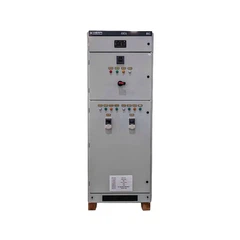
Now, a Power Factor Controller Panel is designed to improve the power factor of an electrical system. It does this by controlling the connection and disconnection of capacitor banks. Capacitors are used to counteract the inductive reactance in the system, which helps to reduce the reactive power and improve the power factor.
The control algorithm in a Power Factor Controller Panel is the brain behind this process. It continuously monitors the power factor of the system and decides when to connect or disconnect the capacitor banks. Here's a step-by-step breakdown of how it works:
1. Monitoring the Power Factor
The first step is to measure the power factor of the electrical system. This is usually done using sensors that measure the voltage and current in the system. The controller then calculates the power factor based on these measurements.
2. Comparing with the Setpoint
Once the power factor is measured, the controller compares it with a pre-set target power factor. This target is usually set by the user, depending on the requirements of the system. If the measured power factor is lower than the setpoint, it means the system is consuming more reactive power than it should, and the controller needs to take action.
3. Deciding on the Capacitor Bank Connection
Based on the comparison, the controller decides whether to connect or disconnect the capacitor banks. If the power factor is low, the controller will connect more capacitor banks to the system to increase the capacitance and reduce the reactive power. On the other hand, if the power factor is too high, the controller will disconnect some of the capacitor banks to avoid over-compensation.
4. Controlling the Switching
The controller then sends signals to the switching devices (usually contactors) to connect or disconnect the capacitor banks. These switching devices are responsible for making and breaking the electrical connections between the capacitor banks and the system.
5. Continuous Monitoring and Adjustment
The process doesn't stop there. The controller continuously monitors the power factor and makes adjustments as needed. This ensures that the power factor remains close to the setpoint at all times, even as the load on the system changes.


Now, let's talk about some of the key features of the control algorithm in a Power Factor Controller Panel:
- Adaptive Control: The algorithm is designed to adapt to changes in the load and power factor of the system. It can adjust the switching of the capacitor banks in real-time to maintain the desired power factor.
- Overload Protection: The controller also includes overload protection to prevent damage to the capacitor banks and other components. If the current or voltage in the system exceeds a certain limit, the controller will disconnect the capacitor banks to protect them.
- Communication Interface: Many Power Factor Controller Panels come with a communication interface that allows them to be connected to a central monitoring system. This enables remote monitoring and control of the power factor, as well as the ability to receive alerts and notifications in case of any issues.
In addition to these features, there are also different types of control algorithms that can be used in a Power Factor Controller Panel. Some of the common ones include:
- Time-Based Control: This algorithm uses a pre-set time schedule to connect and disconnect the capacitor banks. It's simple and easy to implement, but it may not be very effective in systems with variable loads.
- Power Factor-Based Control: This algorithm continuously monitors the power factor and adjusts the capacitor banks accordingly. It's more effective than time-based control, but it requires more sophisticated sensors and control algorithms.
- Load-Based Control: This algorithm takes into account the load on the system and adjusts the capacitor banks based on the load profile. It's the most advanced type of control algorithm, but it also requires the most complex sensors and control systems.
As a supplier of Power Factor Controller Panels, we offer a wide range of products that use different control algorithms to meet the needs of different applications. Whether you're looking for a simple time-based control system or a more advanced load-based control system, we have the right solution for you.
If you're interested in learning more about our Power Factor Controller Panels or other related products, such as Low Tension Switchgear, Power Factor Correction Panel, or Power Factor Improvement Panel, please don't hesitate to contact us. We'd be happy to discuss your requirements and provide you with a customized solution.
In conclusion, the control algorithm in a Power Factor Controller Panel plays a crucial role in improving the power factor of an electrical system. By continuously monitoring and adjusting the capacitor banks, it helps to reduce the reactive power and improve the efficiency of the system. If you're looking to improve the power factor of your electrical system, a Power Factor Controller Panel is definitely worth considering.
References
- "Power Factor Correction Handbook" by Eaton Corporation
- "Electrical Power Systems: Design and Analysis" by Turan Gonen
Send Inquiry