

How does a Power Factor Improvement Panel affect the power factor of industrial machinery?
Sep 30, 2026
Leave a message
In the realm of industrial operations, the efficient use of electrical power is not just a matter of cost - it's a crucial factor for the smooth functioning of machinery and overall productivity. One key metric in this context is the power factor, and a Power Factor Improvement Panel (PFIP) plays a significant role in optimizing it. As a supplier of Power Factor Improvement Panels, I've witnessed firsthand the impact these panels can have on industrial machinery.
Understanding Power Factor
Before delving into how a PFIP affects the power factor of industrial machinery, it's essential to understand what power factor is. Power factor is the ratio of real power (the power that actually does useful work) to apparent power (the total power supplied to the circuit). It is expressed as a value between 0 and 1, with 1 being the ideal scenario. A low power factor means that a significant portion of the supplied power is being wasted in the form of reactive power, which does not contribute to the actual work but still incurs costs.
Industrial machinery often has a low power factor due to the presence of inductive loads such as motors, transformers, and fluorescent lighting. These inductive loads cause the current to lag behind the voltage, resulting in reactive power. When the power factor is low, the electrical system has to supply more current than necessary to deliver the same amount of real power. This leads to increased energy consumption, higher electricity bills, and additional stress on the electrical infrastructure.
How a Power Factor Improvement Panel Works
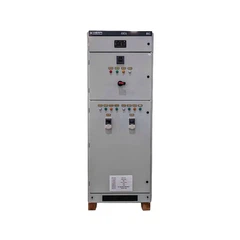
A Power Factor Improvement Panel is designed to counteract the effects of reactive power by introducing capacitive loads into the electrical system. Capacitors in the PFIP generate reactive power that is opposite in phase to the reactive power generated by the inductive loads in the industrial machinery. By doing so, they cancel out the reactive power, thereby improving the power factor.
The PFIP continuously monitors the power factor of the electrical system. When it detects a low power factor, it automatically switches in the appropriate number of capacitors to correct the imbalance. This process is known as power factor correction. The panel uses advanced control algorithms to ensure that the power factor is maintained at an optimal level, usually close to 1.


Impact on Industrial Machinery
Energy Efficiency
One of the most significant impacts of a PFIP on industrial machinery is the improvement in energy efficiency. By reducing the amount of reactive power in the system, the PFIP allows the machinery to operate more efficiently. This means that the same amount of work can be done with less electrical energy, resulting in lower energy consumption and cost savings. For example, a large industrial motor with a low power factor may draw a significant amount of reactive power, increasing its energy consumption. By installing a PFIP, the power factor of the motor can be improved, reducing the overall energy usage and saving money on electricity bills.
Equipment Lifespan
Another benefit of a PFIP is its positive impact on the lifespan of industrial machinery. When the power factor is low, the electrical system has to carry more current than necessary. This increased current can cause overheating in the machinery, leading to premature wear and tear of components such as motors, transformers, and cables. By improving the power factor, the PFIP reduces the current flowing through the system, thereby reducing the heat generated and extending the lifespan of the equipment. This not only saves on replacement costs but also minimizes downtime due to equipment failures.
Voltage Stability
A low power factor can also cause voltage fluctuations in the electrical system. These fluctuations can have a negative impact on the performance of industrial machinery, leading to reduced productivity and potential damage to the equipment. A PFIP helps to stabilize the voltage by reducing the reactive power in the system. By maintaining a stable voltage, the machinery can operate more smoothly and efficiently, resulting in improved product quality and reduced production losses.
Real - World Examples
Let's consider a manufacturing plant that uses a large number of motors and other inductive loads. Before installing a PFIP, the plant had a power factor of around 0.7, which meant that a significant portion of the electrical power was being wasted as reactive power. The plant was experiencing high energy bills and frequent equipment failures due to overheating.
After installing a PFIP, the power factor was improved to around 0.95. This resulted in a significant reduction in energy consumption, with the plant saving up to 20% on its electricity bills. The reduced current flow also led to a decrease in equipment overheating, resulting in fewer breakdowns and longer equipment lifespans. The improved voltage stability also led to better product quality and increased production efficiency.
Related Products
In addition to Power Factor Improvement Panels, there are other related products that can enhance the performance of industrial electrical systems. For instance, Mns Low Voltage Switchgear is a high - quality switchgear solution that provides reliable protection and control for low - voltage electrical systems. It can be used in conjunction with a PFIP to ensure the safe and efficient operation of industrial machinery.
Low Tension Switchgear is another important component in industrial electrical systems. It is designed to control, protect, and isolate electrical circuits, ensuring the safety of personnel and equipment. When used in combination with a PFIP, it can further improve the overall performance of the electrical system.
Electrical Lv Panel is a low - voltage electrical panel that provides a convenient and organized way to distribute electrical power in industrial settings. It can be integrated with a PFIP to optimize the power distribution and improve the power factor of the electrical system.
Conclusion
In conclusion, a Power Factor Improvement Panel has a profound impact on the power factor of industrial machinery. By improving the power factor, it enhances energy efficiency, extends equipment lifespan, and stabilizes voltage, leading to significant cost savings and improved productivity. As a supplier of PFIPs, I am committed to providing high - quality solutions that meet the specific needs of industrial customers.
If you are interested in improving the power factor of your industrial machinery and reaping the benefits of energy efficiency and cost savings, I encourage you to contact us for a detailed consultation. Our team of experts will work with you to understand your requirements and provide the most suitable Power Factor Improvement Panel solution for your business.
References
- "Power Factor Correction Handbook" by Eaton Corporation
- "Electrical Power Systems Quality" by Roger C. Dugan, Mark F. McGranaghan, and Surya Santoso
Send Inquiry