

What is the function of a power factor correction in a compact substation?
Nov 20, 2026
Leave a message
Hey there! As a supplier of compact substations, I often get asked about the ins and outs of these nifty pieces of equipment. One question that comes up a lot is, "What is the function of a power factor correction in a compact substation?" Well, let's dive right in and break it down.
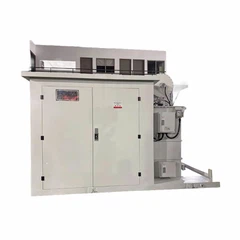
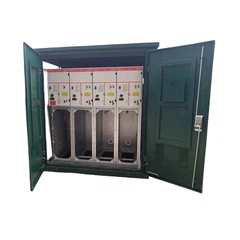
First off, let's talk about what a compact substation is. In simple terms, it's a self - contained unit that steps down high - voltage electricity to a lower voltage for use in various applications. Compact substations are great because they're small, easy to install, and can be used in a variety of settings, from industrial areas to residential neighborhoods. You can check out our 33 KV Compact Substation and Master Unit Substation for some great examples.
Now, onto power factor correction. Power factor is a measure of how effectively electrical power is being used. It's the ratio of real power (the power that actually does work, like running motors or lighting up a room) to apparent power (the total power supplied to a circuit, which includes both real power and reactive power). Reactive power is the power that sloshes back and forth between the source and the load without actually doing any useful work.
A low power factor can cause a bunch of problems. For one, it means that more current has to flow through the electrical system to deliver the same amount of real power. This leads to increased losses in the form of heat in the wires, transformers, and other equipment. Higher losses mean higher energy costs, both for the utility company and the end - user.
In a compact substation, power factor correction helps to address these issues. The main function of power factor correction is to reduce the reactive power in the electrical system, thereby improving the power factor. When the power factor is improved, the current flowing through the system is reduced. This has several benefits.
One major benefit is energy savings. By reducing the current, less energy is wasted in the form of heat in the conductors and equipment. This can lead to significant cost savings over time, especially for large industrial customers. For example, a factory with a low power factor may be paying a lot more for electricity than it needs to. By installing power factor correction equipment in their compact substation, they can lower their energy bills.
Another advantage is that it can increase the capacity of the electrical system. When the current is reduced, the existing equipment can handle more real power without overloading. This means that a compact substation with power factor correction can serve more customers or support larger loads without the need for costly upgrades.
Power factor correction also helps to improve the voltage stability in the electrical system. Reactive power can cause voltage fluctuations, which can be a problem for sensitive equipment. By reducing the reactive power, the voltage remains more stable, and the performance of electrical devices is improved.
Now, let's talk about how power factor correction is achieved in a compact substation. One common method is to use capacitor banks. Capacitors are devices that store and release electrical energy. When connected to the electrical system, they can supply or absorb reactive power, depending on the needs of the load.
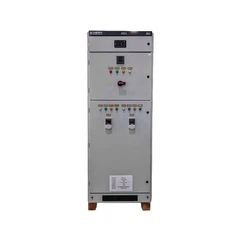
In a compact substation, the capacitor banks are usually controlled by a power factor controller. This controller continuously monitors the power factor of the system and switches the capacitor banks on or off as needed to maintain a high power factor.


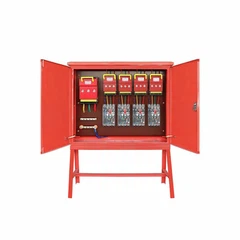
Our Compact Substation Unit is designed to incorporate power factor correction easily. We've made sure that the layout and design of the substation allow for the seamless integration of capacitor banks and power factor controllers. This means that our customers can enjoy the benefits of power factor correction without having to worry about complex installations.
So, if you're in the market for a compact substation, power factor correction is definitely something you should consider. It can save you money, increase the capacity of your electrical system, and improve the performance of your equipment. Whether you're a small business owner looking to cut down on energy costs or an industrial operator needing to expand your electrical capacity, a compact substation with power factor correction can be a great solution.
If you're interested in learning more about our compact substations or want to discuss how power factor correction can work for your specific needs, don't hesitate to reach out and start a procurement - related conversation with us. We're here to help you find the best solution for your electrical requirements.
References:
- Electrical Power Systems by J. R. Lucas
- Power System Analysis and Design by J. Duncan Glover, Mulukutla S. Sarma, and Thomas J. Overbye
Send Inquiry