

What Are The Common Types Of Prefabricated Substations?
Apr 09, 2026
Leave a message
Common types of prefabricated substations mainly include European-style, American-style, and Chinese-style prefabricated substations, with European and American styles being the most widely used. Each type has its own emphasis in structural design, applicable scenarios, and performance characteristics. The following is a detailed comparison:
1. European-style Prefabricated Substation (European Substation)
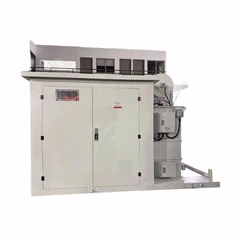
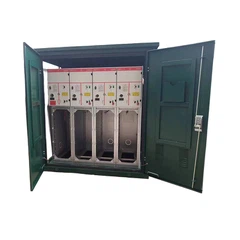
Structural Features: Adopts a "目" (eye-shaped) or "品" (pin-shaped) compartmentalized structure, independently installing high-voltage switchgear, transformers, and low-voltage switchgear in the same enclosure, essentially "packing" traditional substation equipment into a box.
Transformer Type: Mostly uses dry-type transformers, but some use oil-immersed transformers.
Protection Methods: High-voltage side can be protected by load switch + fuse or circuit breaker; Low-voltage side uses load switch + current-limiting fuse; Non-electrical protection only requires over-temperature tripping (because dry-type transformers do not require oil level or gas monitoring).
Advantages: Highly scalable, easy to configure distribution network automation equipment; Convenient maintenance, each functional room is independent, and maintenance does not affect each other; Good electromagnetic shielding, low radiation.
Application Scenarios: Suitable for multi-story residential buildings, high-rise buildings, commercial centers, and other locations with high power supply reliability requirements.
2. American-style Pan-mounted Transformer (American Transformer)
Structural Features: Integrated design, with load switches, fuses, surge arresters, and other high-voltage components directly immersed in the transformer tank, eliminating the oil conservator. The tank and radiator are exposed, forming a "品" (pin) shaped layout.
Transformer Type: Oil-immersed transformer.
Protection Methods: High-voltage side uses fuses for short-circuit and overload protection; Low-voltage side uses molded case circuit breakers, providing multiple protections including long-time overload protection, short-circuit protection, and ground fault protection; Non-electrical quantity protection is achieved with pressure relief valves, oil thermometers, and temperature controllers.
Advantages: Small size and small footprint (only 1/5 to 1/3 of a European-style prefabricated substation of the same capacity), easy installation; lower cost, suitable for mass deployment.
Limitations: Oil-immersed load switches may produce harmful gases such as acetylene, posing a safety hazard; no obvious disconnection point, inconvenient maintenance; original design does not include low-voltage metering and protection, requiring localization modification.
Application Scenarios: Widely used in urban streetlights, temporary construction power supplies, and new energy photovoltaic/wind power booster stations, etc.
Send Inquiry