

Composition Of High-Voltage Switchgear
Apr 17, 2026
Leave a message
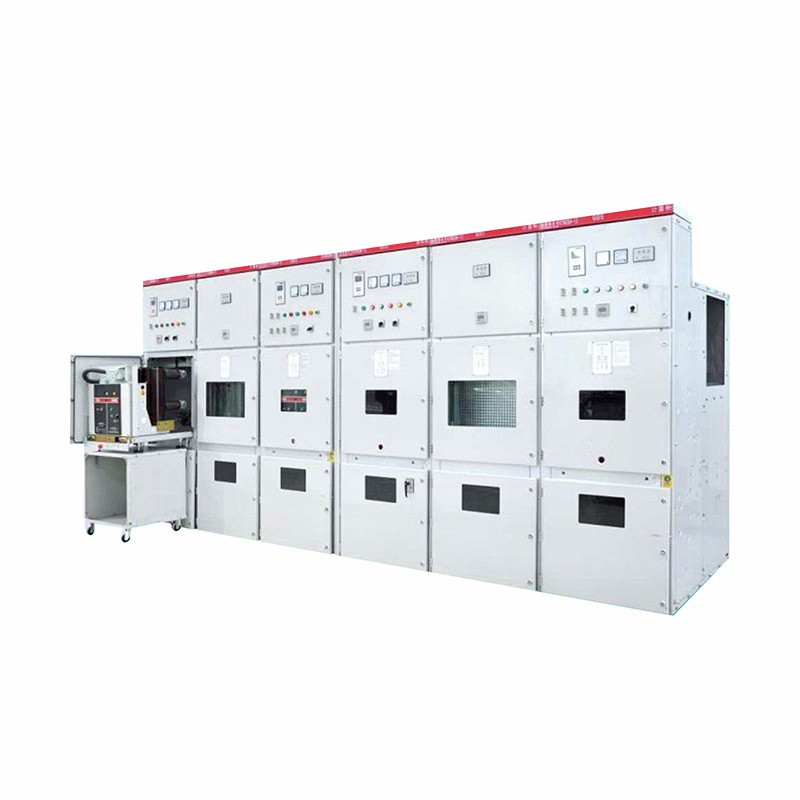
From a functional module perspective, high-voltage switchgear mainly consists of core components such as the cabinet, busbar system, circuit breakers, disconnecting switches, grounding switches, instrument transformers, surge arresters, secondary control circuits, and protection devices. These components work together to achieve breaking, isolation, measurement, and protection functions.
1. Cabinet Structure: The Cornerstone of Protection and Support
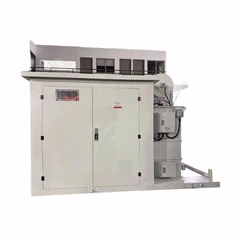
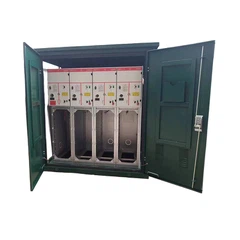
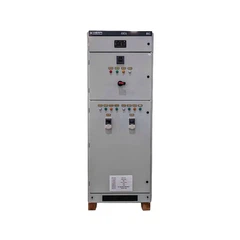
The cabinet is the physical framework of the high-voltage switchgear, requiring high strength, corrosion resistance, and good sealing. Its structure typically adopts a metal-enclosed design, available in both handcart and fixed forms. The cabinet interior is divided into functional areas such as the busbar compartment, circuit breaker compartment, cable compartment, and secondary control compartment by partitions. These areas are isolated by metal partitions or insulating plates to prevent arc flashover and short-circuit accidents. The cabinet protection rating must reach IP4X or higher to resist dust and foreign object intrusion, and it is also equipped with a pressure relief channel to quickly discharge arc energy in the event of an internal fault, ensuring equipment safety.
2. Busbar System: The "Aorta" of Power Transmission
The busbar system is the core conductive component of high-voltage switchgear, responsible for distributing electrical energy from the incoming terminals to each outgoing circuit. Busbars are typically made of highly conductive copper or aluminum, with rectangular or circular cross-sectional shapes to reduce skin effect and resistance loss. Busbar connections require bolting or crimping to ensure contact resistance is below specified values and prevent localized overheating. To improve insulation performance, busbar surfaces are often wrapped with heat-shrinkable insulating tubing or coated with insulating varnish, and fixed with supporting insulators to prevent displacement due to vibration or short-circuit impacts.
3. Circuit Breaker: The "Executor" of Opening and Closing
The circuit breaker is the core protective component of high-voltage switchgear, used to interrupt circuit current under normal or fault conditions. Its structure includes a contact system, arc-extinguishing chamber, operating mechanism, and insulating medium. When a short circuit or overload occurs in the circuit, the circuit breaker quickly interrupts the current through the trip unit. The arc-extinguishing chamber uses the energy of the electric arc to generate a high-pressure gas or vacuum environment, elongating and cooling the arc until it is extinguished, preventing equipment damage. Modern circuit breakers mostly use vacuum or SF6 gas as the insulating medium, featuring strong breaking capacity, long service life, and low maintenance.
4. Disconnecting Switch and Grounding Switch
"Double Insurance" for Safety Isolation The disconnecting switch is used to isolate energized parts from equipment during maintenance, ensuring the safety of operators. Its structure is simple, and there is no arc-extinguishing device between the contacts; therefore, it can only be operated after the circuit breaker has been tripped. The grounding switch is used to ground the equipment, releasing residual charge and preventing accidental energization. The two are often interlocked through mechanical interlocking devices to avoid misoperation. For example, if the disconnecting switch is not open, the grounding switch cannot be closed; if the grounding switch is not open, the circuit breaker cannot be closed, thus forming multiple layers of safety protection.
Send Inquiry