

Manufacturing Process of Low-Voltage Switchgear
Mar 12, 2026
Leave a message
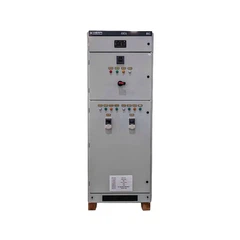
The manufacturing process of low-voltage switchgear is a systematic and standardized process, encompassing multiple key stages such as design, material preparation, machining, electrical assembly, and testing and inspection. This ensures that the product meets the safety, stability, and intelligence requirements of modern power systems.
Design and Standards Compliance
The production of low-voltage switchgear begins with precision design, strictly adhering to national standards (such as GB/T 7251.1-2023) and international standards (IEC 61439) to ensure that electrical clearances, creepage distances, and protection levels (IP40 and above) meet safety specifications.
Design content includes:
Electrical schematic diagrams and wiring diagrams
Cabinet structure and modular layout
Heat dissipation and anti-condensation design
Mechanical interlocking mechanism for drawer-type functional units
Material Preparation and Housing Machining
Cabinet material: Typically uses high-quality cold-rolled steel sheet (1.5–3mm thick), possessing high strength and corrosion resistance.
CNC Machining: High-precision forming is achieved through laser cutting and CNC bending, with errors controlled at the micron level.
Surface Treatment: After degreasing and phosphating, electrostatic powder coating or cathodic electrophoresis is performed to improve corrosion resistance and appearance.
Busbar System Processing and Installation:
Busbar Material: Main busbars primarily use high-purity copper busbars, with the neutral conductor cross-section not less than half that of the phase busbar.
Processing Technology: Precision cutting and punching; bending and forming (radius and angle strictly according to drawings); silver plating (contact surface plating ≥8μm) to reduce contact resistance.
Insulation Protection: Double insulation is achieved using heat-shrink tubing and insulating partitions, with a withstand voltage >3kV.
Electrical Component Installation and Circuit Connection:
Component Selection: Circuit breakers, contactors, relays, etc., must have certificates of conformity and undergo incoming inspection.
Installation Requirements: Position the components according to the drawings, arrange them neatly for easy maintenance.
Drawer units must achieve precise positioning in three positions: "operation," "test," and "isolation," and be equipped with mechanical interlocks to prevent accidental operation.
Wiring Specifications: Use multi-strand copper wire for secondary circuits, with wiring horizontally and vertically aligned.
All connection points must be securely crimped, clearly labeled, and easy to inspect.
Send Inquiry