

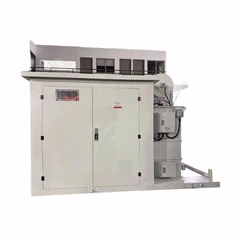
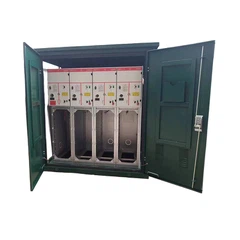
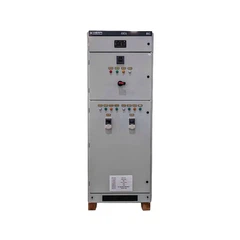
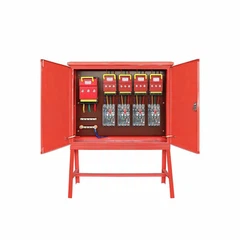
The Role of Distribution Cabinets
Mar 16, 2026
Leave a message
Distribution cabinets are key equipment in power systems used for distributing, controlling, and protecting electrical energy. Their core function is to distribute electrical energy from transformers or the upstream power grid to different branches according to demand, through internal circuit breakers, contactors, and other components. They also possess protection capabilities against overload and short-circuit faults.
Simply put, distribution cabinets are like the "central nervous system" of the power system, ensuring the safe and efficient transmission of electrical energy to terminal equipment.
Technical Principles and Structural Composition
Distribution cabinets typically consist of a cabinet body, busbars, circuit breakers, protective devices (such as fuses and residual current devices), measuring instruments (ammeters and voltmeters), and operating mechanisms. Their working principle is based on circuit control technology: circuit breakers control the opening and closing of the circuit, and protective devices automatically cut off the power supply in case of abnormal current, preventing equipment damage or fire risks; the busbars are responsible for distributing electrical energy from the input terminal to each branch, ensuring stable current transmission.
Application Scenarios and Classifications
Based on usage scenarios, distribution cabinets can be classified into the following categories
Low-voltage distribution cabinets: Suitable for scenarios with a rated voltage not exceeding 1000V, commonly found in factories, commercial buildings, and residential areas, used to distribute electrical energy to lighting, air conditioning, motors, and other equipment.
High-voltage distribution cabinets: Used in scenarios with a rated voltage above 1kV, such as power plants, substations, and large industrial projects, responsible for the distribution and conversion of high-voltage electrical energy.
Power distribution cabinets: Designed for power equipment such as motors and compressors, possessing stronger overload capacity and start-up control functions.
Lighting distribution cabinets: Specifically designed for lighting systems, supporting multi-circuit control and dimming functions, commonly found in office buildings, shopping malls, and other locations.
Industry Standards and Safety Specifications
The design, production, and installation of distribution cabinets must strictly comply with national standards, such as China's GB 7251 series standards and the international IEC 60439 standard. These standards set clear requirements for the cabinet's protection rating (e.g., IP40, IP54), insulation performance, and temperature rise control to ensure stable operation of the equipment in harsh environments (e.g., high temperature, humidity, dust). Furthermore, safety regulations require that distribution cabinets be equipped with clear warning signs, operating handles, and emergency stop buttons to prevent electric shock or mechanical injury due to misoperation.
Selection and Usage Considerations
Load Matching: The rated current of the distribution cabinet must be selected based on the total power of the terminal equipment to avoid long-term overload damage to components. For example, if the total load is 200kW, a distribution cabinet with a rated current of 400A or higher should be selected.
Environmental Adaptability: In humid or corrosive environments, a cabinet with a higher protection rating (e.g., IP65) should be selected, and a heater should be provided to prevent condensation.
Maintenance Cycle: It is recommended to conduct a comprehensive inspection of the distribution cabinet every 3-6 months, focusing on cleaning dust, checking wiring tightness, and testing the reliability of protection devices.
Send Inquiry