

How does a Power Factor Improvement Panel affect the electrical load?
Jun 08, 2026
Leave a message
Power Factor Improvement Panels (PFIPs) play a crucial role in modern electrical systems, especially when it comes to managing electrical loads. As a supplier of these panels, I've witnessed firsthand how they can transform the efficiency and performance of electrical systems. In this blog, I'll delve into how a Power Factor Improvement Panel affects the electrical load, exploring its benefits, working principles, and real - world applications.
Understanding Power Factor
Before we dive into the impact of PFIPs on electrical loads, it's essential to understand what power factor is. Power factor (PF) is a measure of how effectively electrical power is being used in a circuit. It is the ratio of real power (P), which is the power that actually does work, to apparent power (S), which is the product of voltage and current. Mathematically, it is expressed as (PF=\frac{P}{S}).
A power factor of 1 (or 100%) means that all the electrical power supplied is being used effectively to perform useful work. However, in many real - world electrical systems, the power factor is less than 1. This is due to the presence of inductive loads such as motors, transformers, and fluorescent lighting. These inductive loads draw reactive power (Q), which does not perform any useful work but still requires current to flow through the system.
How Power Factor Improvement Panels Work
A Power Factor Improvement Panel is designed to correct the power factor of an electrical system. It typically consists of a set of capacitors connected in parallel with the electrical load. Capacitors generate reactive power that is opposite in phase to the reactive power drawn by inductive loads.
When a PFIP is installed in an electrical system, the capacitors in the panel supply the reactive power needed by the inductive loads. This reduces the amount of reactive power that has to be drawn from the utility grid. As a result, the apparent power in the system decreases, and the power factor improves.
Impact on Electrical Load
Reduced Current Draw
One of the most significant impacts of a PFIP on the electrical load is the reduction in current draw. When the power factor is low, the electrical system has to draw more current to supply the same amount of real power. This is because the apparent power (S = VI), and for a given real power (P), a lower power factor means a higher apparent power and thus a higher current.
By improving the power factor, the PFIP reduces the apparent power, which in turn reduces the current flowing through the electrical system. This has several benefits. First, it reduces the stress on electrical cables, switches, and other components, which can extend their lifespan. Second, it reduces the energy losses in the electrical system, as the power losses in a conductor are proportional to the square of the current ((P_{loss}=I^{2}R)).
Energy Savings
Improving the power factor can lead to significant energy savings. Many utility companies charge industrial and commercial customers based on their apparent power consumption. By improving the power factor, the apparent power consumption is reduced, which can result in lower electricity bills.
In addition to the direct savings on electricity costs, the reduced current draw also means less energy is wasted as heat in the electrical system. This further contributes to overall energy efficiency.
Increased System Capacity
A PFIP can also increase the capacity of an electrical system. When the power factor is low, the electrical system has to operate at a higher current to supply the required real power. This can limit the amount of additional load that can be added to the system.
By improving the power factor, the current draw is reduced, which frees up capacity in the electrical system. This means that more electrical equipment can be added to the system without overloading it. For example, a factory that has a low power factor may find that it cannot add new machinery due to limited electrical capacity. By installing a PFIP, the power factor can be improved, and the system can accommodate the new equipment.


Improved Voltage Regulation
Another benefit of a PFIP is improved voltage regulation. Inductive loads can cause voltage drops in an electrical system, especially during periods of high demand. By supplying the reactive power needed by the inductive loads, the PFIP helps to maintain a more stable voltage level.
This is particularly important for sensitive electrical equipment, such as computers and electronic devices, which require a stable voltage supply to operate properly. A PFIP can help to reduce voltage fluctuations and ensure that the electrical equipment receives a consistent voltage.
Real - World Applications
PFIPs are widely used in various industries, including manufacturing, commercial buildings, and data centers.
In the manufacturing industry, large motors and other inductive loads are common. These loads can cause a low power factor, resulting in high energy costs and reduced system efficiency. By installing a PFIP, manufacturers can improve the power factor, reduce energy consumption, and increase the lifespan of their electrical equipment.
Commercial buildings, such as offices and shopping malls, also benefit from PFIPs. Lighting systems, HVAC systems, and other electrical equipment in these buildings can draw a significant amount of reactive power. A PFIP can help to correct the power factor and reduce the overall energy consumption of the building.
Data centers are another area where PFIPs are essential. These facilities require a large amount of electrical power to operate their servers and other equipment. A low power factor in a data center can lead to increased energy costs and reduced reliability. By installing a PFIP, data center operators can improve the power factor, reduce energy consumption, and ensure the stable operation of their equipment.
The Role of Power Factor Controller Panels
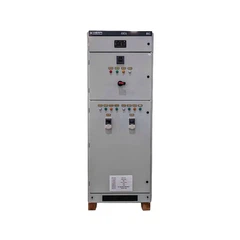
A Power Factor Controller Panel is an important component of a PFIP. It monitors the power factor of the electrical system and controls the switching of the capacitors in the PFIP.
The controller continuously measures the power factor and determines the amount of reactive power that needs to be supplied by the capacitors. Based on this measurement, it switches the capacitors on or off to maintain the desired power factor. This ensures that the PFIP operates efficiently and effectively.
Compatibility with Low - voltage AC Switchgear
PFIPs are often used in conjunction with Low - voltage AC Switchgear. The switchgear provides a means of controlling and protecting the electrical system. It can be used to isolate the PFIP from the rest of the electrical system for maintenance or in case of a fault.
The switchgear also plays a role in the overall safety of the electrical system. It can detect overcurrents and short - circuits and automatically disconnect the PFIP from the power supply to prevent damage.
Conclusion
In conclusion, a Power Factor Improvement Panel has a significant impact on the electrical load. It can reduce current draw, save energy, increase system capacity, and improve voltage regulation. These benefits make PFIPs an essential component of modern electrical systems.
If you're interested in improving the power factor of your electrical system and reaping the associated benefits, I encourage you to contact us for a consultation. We have a wide range of Power Factor Improvement Panels that can be customized to meet your specific needs. Whether you're a small business or a large industrial facility, we can help you optimize your electrical system and reduce your energy costs.
References
- Electric Power Distribution Handbook, by Richard H. Lee
- Principles of Electric Circuits: Conventional Current Version, by Thomas L. Floyd
Send Inquiry