

How does a Power Factor Controller Panel handle unbalanced loads?
Jul 30, 2026
Leave a message
Hey there! As a supplier of Power Factor Controller Panels, I often get asked about how these panels handle unbalanced loads. It's a crucial topic, especially for industries and facilities where load imbalances can cause a whole host of issues. So, let's dive right in and explore this fascinating subject.
Understanding Unbalanced Loads
First off, what exactly are unbalanced loads? In a three - phase electrical system, a balanced load means that the current in each phase is equal. But in real - world scenarios, it's quite common to have unbalanced loads. This can happen due to various reasons, like different types of equipment being connected to different phases, or some equipment malfunctioning.
Unbalanced loads can lead to several problems. For one, they can cause overheating in transformers and other electrical components. This not only shortens the lifespan of these devices but also poses a safety risk. Additionally, unbalanced loads can result in poor power quality, leading to voltage fluctuations and increased energy consumption.
How Power Factor Controller Panels Come into Play
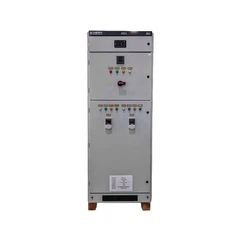
Power Factor Controller Panels are designed to optimize the power factor of an electrical system. But they also play a significant role in handling unbalanced loads. These panels use advanced algorithms and sensors to monitor the electrical parameters in each phase.
When an unbalanced load is detected, the Power Factor Controller Panel takes action. It can adjust the power factor correction capacitors connected to each phase independently. By doing so, it helps to balance the reactive power in the system. This is crucial because reactive power can cause inefficiencies in the electrical system, and an unbalanced distribution of reactive power exacerbates these issues.
Monitoring and Analysis
The first step in handling unbalanced loads is to accurately monitor the electrical parameters. Power Factor Controller Panels are equipped with sensors that continuously measure the current, voltage, and power factor in each phase. This real - time data is then analyzed by the panel's microprocessor.
The microprocessor can identify the degree of load imbalance and determine the appropriate course of action. It can calculate the amount of reactive power that needs to be compensated for in each phase to bring the system back into balance.
Capacitor Switching
One of the key functions of a Power Factor Controller Panel is capacitor switching. Capacitors are used to correct the power factor by providing reactive power. In the case of unbalanced loads, the panel can switch in or out different capacitors in each phase to balance the reactive power.
For example, if one phase has a higher reactive power demand than the others, the panel can connect additional capacitors to that phase. Conversely, if a phase has an excess of reactive power, the panel can disconnect some of the capacitors. This dynamic control helps to maintain a balanced power factor across all phases.
Compatibility with Other Equipment
Power Factor Controller Panels are often integrated with other electrical equipment in a system. For instance, they can work in conjunction with Mns Low Voltage Switchgear. This switchgear provides a safe and reliable way to distribute electrical power, and when combined with a Power Factor Controller Panel, it can help to manage unbalanced loads more effectively.
Similarly, Electrical Lv Panel can also be integrated with the Power Factor Controller Panel. The low - voltage panel distributes electrical power to different loads, and the controller panel ensures that the power factor is optimized and the loads are balanced.
Another important piece of equipment is Lv And Hv Switchgear. High - voltage and low - voltage switchgear are used to control and protect the electrical system. When combined with a Power Factor Controller Panel, they can enhance the overall performance and reliability of the system, especially in the presence of unbalanced loads.
Benefits of Using a Power Factor Controller Panel for Unbalanced Loads
There are several benefits to using a Power Factor Controller Panel to handle unbalanced loads. Firstly, it improves the power quality of the electrical system. By balancing the reactive power, it reduces voltage fluctuations and improves the stability of the system.


Secondly, it helps to reduce energy consumption. Unbalanced loads can cause inefficiencies in the electrical system, leading to higher energy bills. By correcting the power factor and balancing the loads, the Power Factor Controller Panel can help to lower energy costs.
Finally, it extends the lifespan of electrical equipment. Overheating due to unbalanced loads can damage transformers, motors, and other components. By keeping the loads balanced, the panel helps to prevent premature wear and tear, saving on maintenance and replacement costs.
Contact Us for Your Power Factor Controller Panel Needs
If you're facing issues with unbalanced loads in your electrical system, a Power Factor Controller Panel could be the solution you need. Our company offers high - quality Power Factor Controller Panels that are designed to handle even the most challenging load imbalances.
Whether you're in the industrial, commercial, or residential sector, our panels can help you optimize your power factor, improve power quality, and reduce energy costs. So, if you're interested in learning more about our products or have any questions, don't hesitate to reach out. We're here to assist you in finding the best solution for your specific needs.
References
- "Electrical Power Systems Quality" by Roger C. Dugan, Mark F. McGranaghan, and Surya Santoso.
- "Power System Analysis and Design" by J. Duncan Glover, Mulukutla S. Sarma, and Thomas J. Overbye.
Send Inquiry